
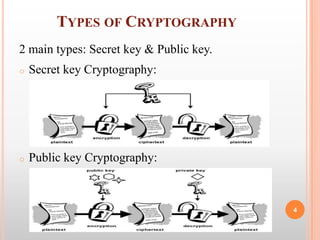
Without proper key management, organizations can risk successfully nullifying the advantages of encryption, potentially resulting in unauthorized entry, information breaches and knowledge loss. RSA is a public-key encryption algorithm and the usual for encrypting information despatched over the web. Unlike Triple DES, RSA is considered an uneven algorithm because it uses a pair of keys. You have your public key to encrypt the message and a private key to decrypt it. RSA encryption ends in a huge batch of mumbo jumbo that takes attackers lots of time and processing energy to interrupt.
Challenges And Risks In Cryptographic Keys
The key rotation course of involves decrypting information with an old encryption key, then re-encrypting the info with a model new encryption key. Rotating one delicate knowledge key impacts all other delicate data keys, while rotating a storage data key impacts all different storage knowledge keys. The prime cloud safety risk in 2022 is insufficient identification, credential, entry, and key administration. Key Management Systems (KMS), together with hardware security modules and other cryptographic tools, are commonly used to deal with this risk. Knowledge that has been encrypted with misplaced cryptographic keys won’t ever be recovered.
Envelope Encryption: Kek Vs Dek And Key Wrapping
You can rotate the keys to guard entry to sensitive data, storage information, and audit knowledge, at regular intervals to offer greater security. To rotate the keys, you should provoke a job in the Administration Internet Interface. Encryption key administration is an essential aspect of guaranteeing information safety.
If you’d prefer to discover what KeyControl has to offer, try all of the ways it could help your enterprise protect keys at scale. They’re born, stay to fulfill a function, and eventually, they retire. Keep forward of the curve with Keyfactor’s monthly newsletter — full of curated insights, expert ideas, must-watch videos, and practical guides to help you keep safe, agile, and quantum-ready. Whether Or Not you are a builder, defender, enterprise chief or just wish to keep secure in a connected world, you may discover timely updates and timeless ideas in a energetic, accessible format.
The Vital Thing Administration Lifecycle
There are situations the place keys must be exported from the safe environment of the cryptographic service supplier (CSP) into an software’s data area. Keys that have been exported are saved in encrypted key BLOB structures. Though it’s most popular that no humans are in a position to view keys, at least, the key administration system ought to account for all people who are in a position to view plaintext cryptographic keys. We have supplied suggestions on the choice of crypto suites within an application based on utility and safety aims. Utility developers oftentimes begin the event of crypto and key administration capabilities by inspecting what is available in a library. Choice of the cryptographic and key administration algorithms to make use of inside a given utility should begin with an understanding of the aims of the appliance.
ECC is widely used in safe communications such as TLS/SSL and cryptocurrencies as a result of its lightweight but powerful encryption. Some solutions, corresponding to a key management service (KMS) and open-source key management instruments, provide versatile and customizable choices. Others are specialized applied sciences, corresponding to hardware security modules (HSMs), or protocols, such as the Key Administration Interoperability Protocol (KMIP). Key technology entails using a safe algorithm to create a cryptographic key, which is essentially a string of random or pseudorandom bits or numbers.
- As an end-to-end solution, KeyControl helps you handle, monitor, and control cryptographic keys all through their lifecycle.
- Cryptography keys have to be stored with a high degree of confidentiality, integrity, and availability (the CIA triad).
- It is essential for organizations that use multiple key administration options, work with information in disparate methods or want to modify suppliers.
- Session keys are sometimes changed, usually utilizing a unique session key for every message encrypted.
Therefore, it’s essential that the applying incorporate a secure key backup capability, particularly for applications that assist information at relaxation encryption for long-term data shops. If they’re not well-protected, you danger exposing your delicate knowledge resources to unauthorized entry and exposure. It is the inspiration on which the safety of each encrypted asset depends. The strongest encryption algorithm on the planet supplies no meaningful safety if its keys are hardcoded, unrotated, over-shared, or saved in plaintext information accessible to anyone who can learn the filesystem. As cryptography requirements broaden with new rules, purposes, and gadget sorts, handbook key administration can not hold pace.
With the assistance of Steganography, we can https://bizexclusivetoday.com/cerchi-una-piattaforma-affidabile-per-investire-in-criptovalute.html cover any digital content just about like text, image, videotape, and so forth. Symmetric Key Cryptography is an encryption system the place the sender and receiver of a message use a single frequent key to encrypt and decrypt messages. Basically, KMIP supplies a standard language for various key administration techniques to communicate and seamlessly function together. Open-source instruments can benefit organizations that require high flexibility, want to keep away from vendor lock-in or must ensure transparent security practices. In DevOps, functions are constantly developed, tested and deployed, typically at a speedy pace.
An attacker who compromises an software server can not extract keys that reside contained in the HSM. PCI DSS, HIPAA, and FIPS Degree 3 require hardware storage for the highest-sensitivity key materials. Quantum computers will eventually break widely used asymmetric algorithms like RSA and ECC. Cryptographic keys underpin practically each security management in modern IT. A single compromised key can result in data breaches, financial losses, and regulatory penalties. Organizations with a mean of 88,750 keys and certificates cannot depend on manual processes to maintain them secure.